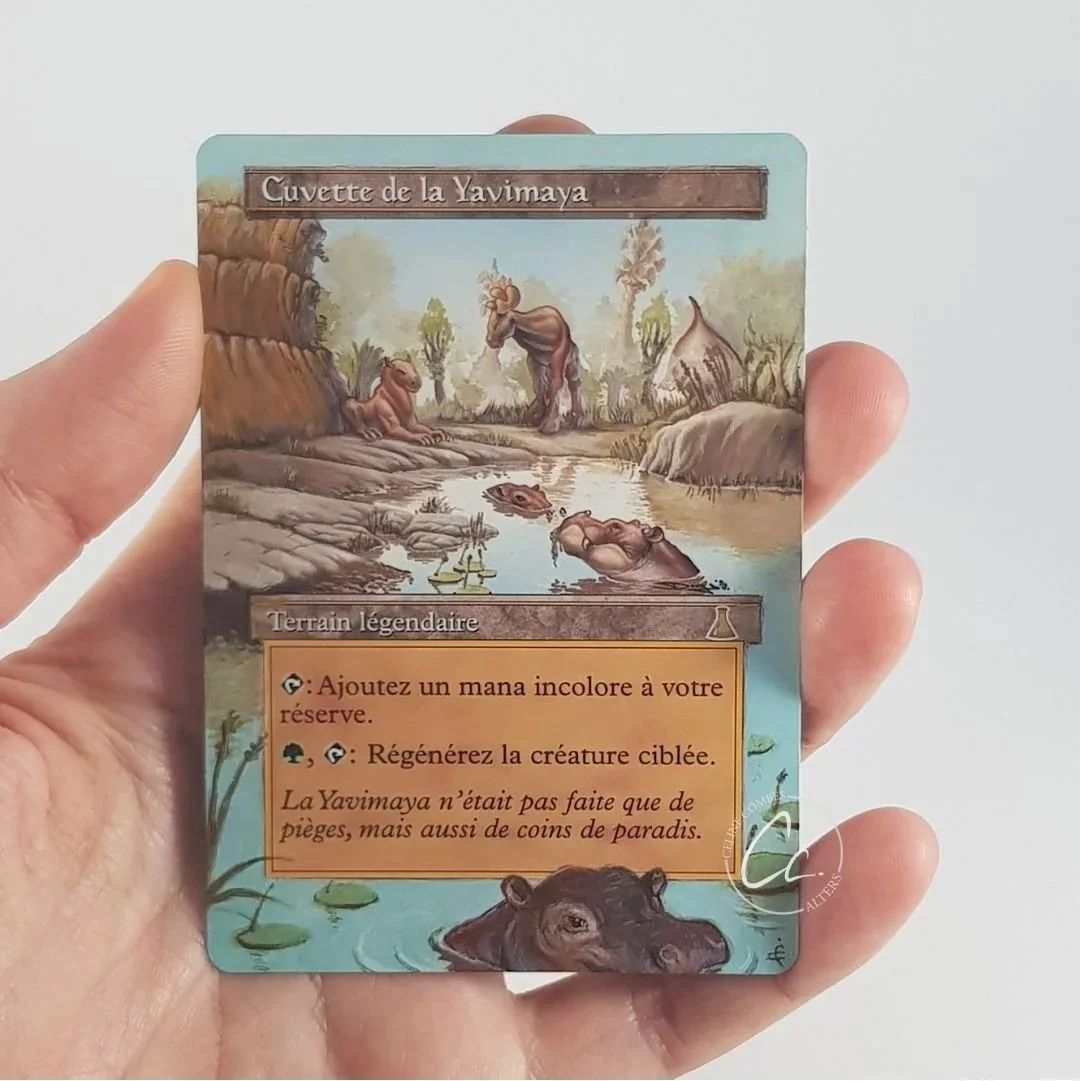
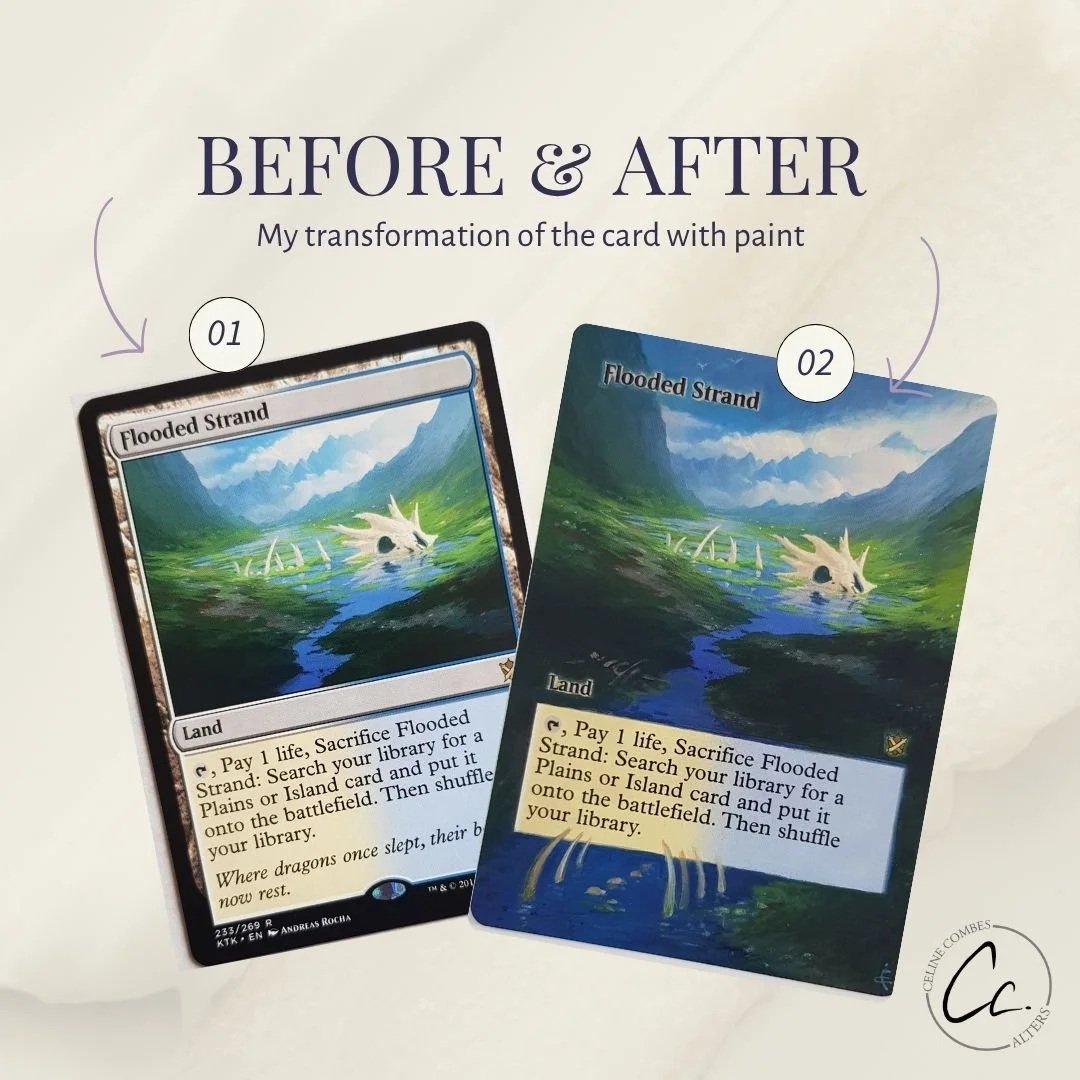
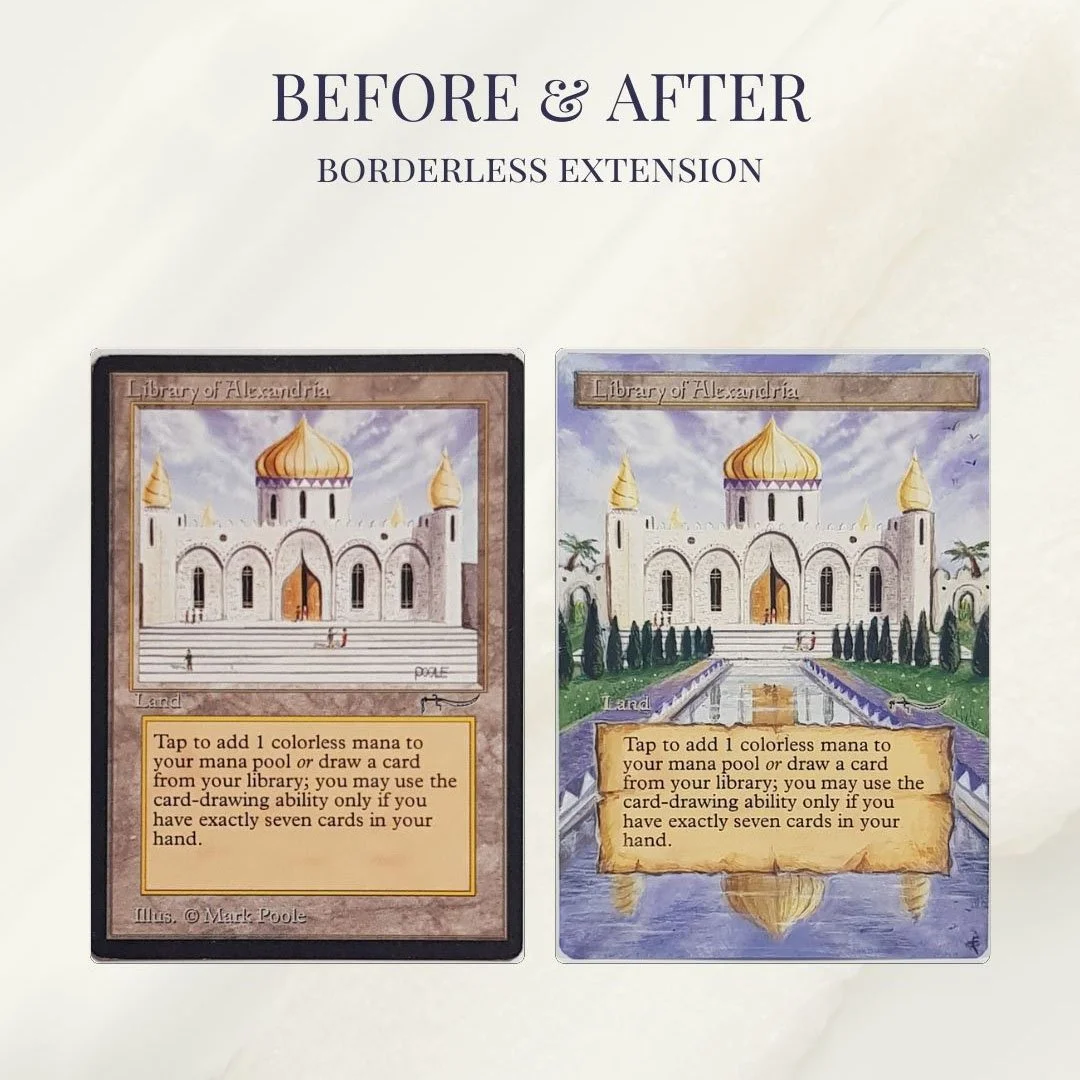
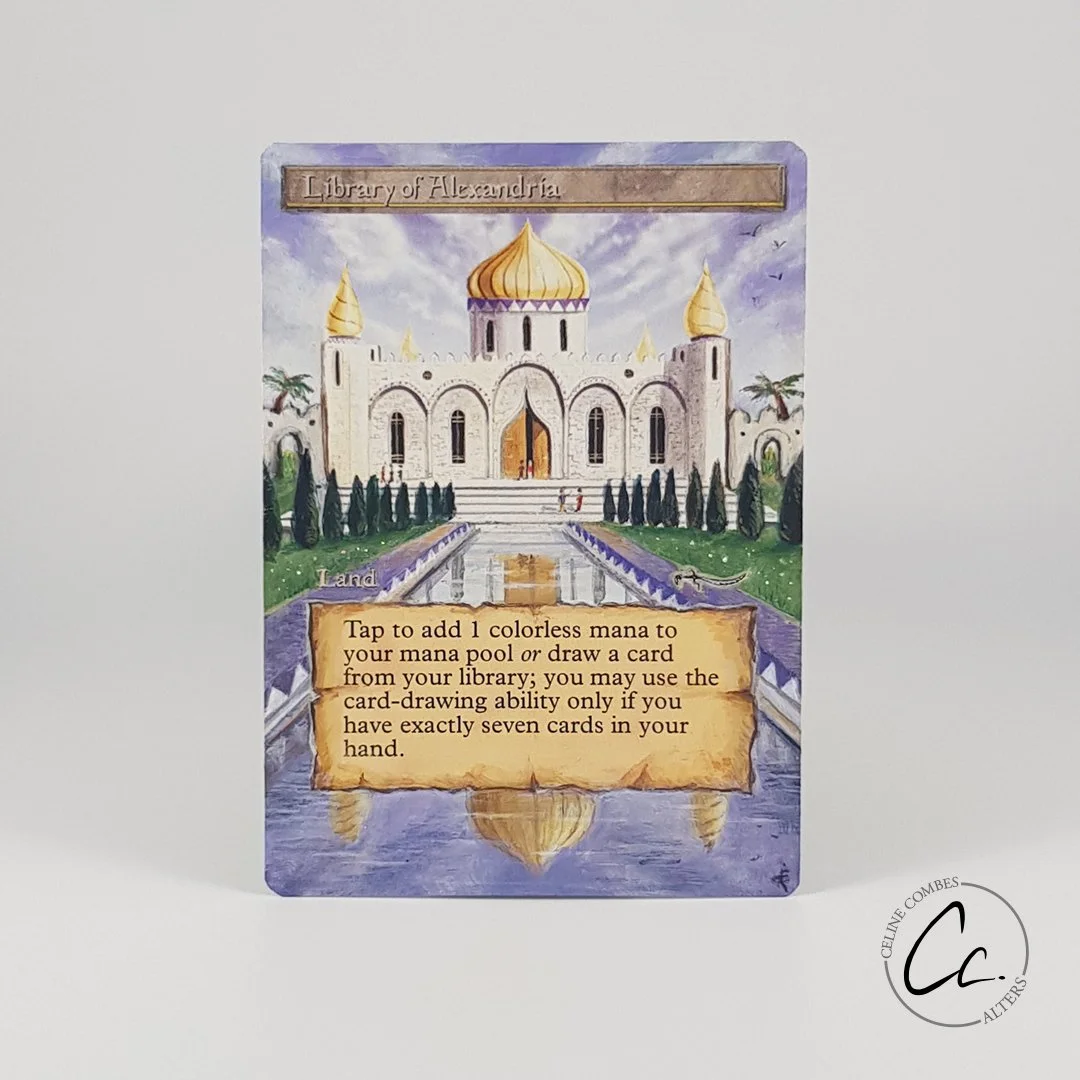
You may have been looking at altered cards for a while. You’ve saved a few that caught your eye, or perhaps a borderless Dual Land stopped you in your tracks while scrolling.
At some point, you start wondering what actually happens when you commission one.
Here’s how the process works, from your first message to the moment your card comes back to you.
It starts with a form
Before I take on a commission, I need a few details about the card, your idea, and the kind of alteration you have in mind.
You can send all of that through the request form.
I use the information you provide to look at the project properly before giving you an answer. I’ll let you know whether I can take it on, what it would cost, and when I could work on it.
It also means we don’t need to spend time going back and forth before knowing whether the project is possible.
I confirm the project, price, and timing before we begin
Once I receive your request, I look at the card itself, the complexity of the extension you have in mind, and my current schedule.
I’ll then come back to you with the details: whether I can take on the commission, the price, and the month I can assign to it.
Sometimes a project isn’t the right fit for my work, or the timing doesn’t allow me to give it the attention it needs. In that case, I’ll tell you.
I keep my number of commissions limited so that I have enough time for each card.
A €60 deposit to reserve your slot
I deliberately keep my monthly schedule limited. I don’t work on a large number of cards at once, and each commission has a dedicated painting month.
Once we have agreed on the project and the price, a €60 deposit reserves your place in my schedule.
From there, your commission is officially booked and I can plan the work around it.
You ship the card. I take care of the rest.
This is often where hesitation sets in: the moment of entrusting something precious to someone else.
For collectors in Europe, insured shipping is straightforward to arrange. For those outside Europe — particularly in the US — I recommend a more practical alternative: purchasing the card on Cardmarket from a European seller, who can ship it directly to my studio. That way, you avoid a transatlantic round trip for something valuable.
For the United States and countries outside Europe, I’ll order the card.
Once a card arrives at my studio, I handle it carefully and keep it safely stored until it’s time to work on it.
(For high-value cards, I’ve gone into more detail about this in the Library of Alexandria case study.)
When your month arrives, I can start painting
Before I begin, I spend some time looking at the original illustration.
I pay attention to its colours, lighting, composition and overall atmosphere. The new section needs to work with the original artwork rather than simply being painted around it.
I build the extension gradually with successive layers of acrylic paint. Depending on the project, we may also have discussed adding details such as gold leaf or metallic paint.
The goal is for the added artwork to feel like it belongs to the original card.
Final balance, then your card comes home
Once the alteration is finished, I send you photos so you can see the completed card.
I’ll also send you the payment details by email: the €60 deposit paid when the commission was booked, followed by the remaining balance and return shipping costs at the beginning of your painting month.
For larger commissions, a split payment can also be arranged.
Once everything is settled, I carefully package the card using protective materials and send it with tracking.
And then it makes its way back to you.
It’s still the card you sent me, but it has become something completely personal to you — a hand-painted alteration made specifically for that card.
There won’t be another one exactly like it.
Wondering whether an altered card keeps its value? I’ve written about that too: you can read it here.
Have a card in mind? Explore the commission options or submit your request directly.
More articles about MTG altered art